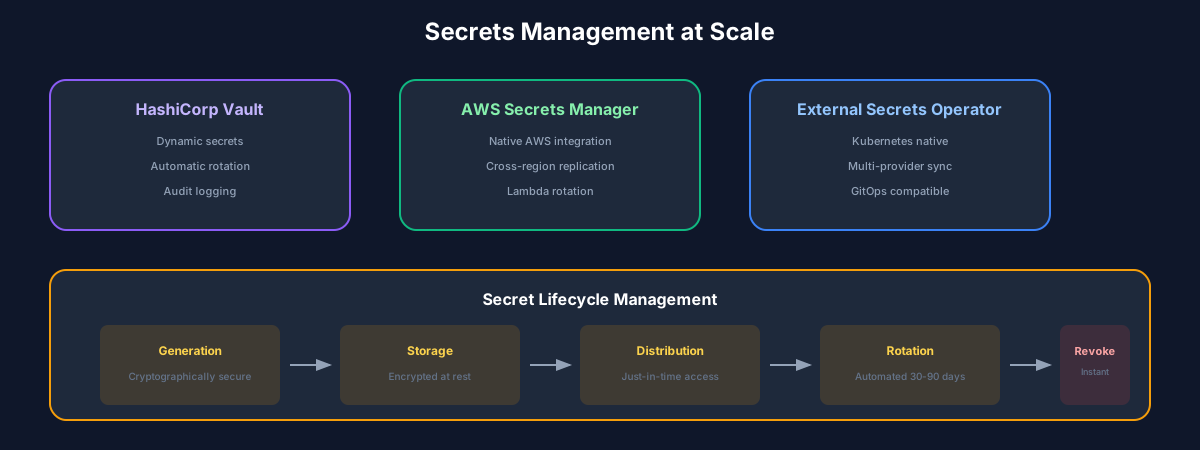
The Secrets Problem
Every application needs secrets: database passwords, API keys, encryption keys, certificates. How you manage these secrets often determines whether a breach is a minor incident or a catastrophic failure.
Common anti-patterns that lead to breaches:
The Secret Management Hierarchy
Level 1: Encrypted Files
Better than plaintext. Tools like SOPS or git-crypt encrypt secrets in your repo. Still has versioning and distribution challenges.
Level 2: Cloud Provider Secrets
AWS Secrets Manager, GCP Secret Manager, Azure Key Vault. Good integration with cloud services, automatic rotation for some secret types, but vendor lock-in.
Level 3: Dedicated Secret Managers
HashiCorp Vault, CyberArk Conjur. Full-featured platforms with dynamic secrets, fine-grained policies, comprehensive audit logs, and multi-cloud support.
Dynamic Secrets: The Game Changer
Static secrets are shared, long-lived, and hard to revoke. Dynamic secrets are generated on-demand, unique per client, and automatically expire.
Example: Instead of one shared database password, Vault creates a unique database user for each application instance. Credentials expire after an hour. If compromised, the blast radius is one instance for one hour, not your entire database forever.
This pattern works for databases, cloud provider credentials, PKI certificates, SSH keys, and more.
Rotation Strategies
Automated rotation is essential. Manual rotation means rotation never happens until after a breach.
Zero-downtime rotation pattern:
For database credentials, this often means temporary dual-credential support in your connection logic.
Audit and Access Control
Every secret access should be logged: who accessed what, when, from where. This audit trail is invaluable for incident investigation and compliance.
Implement fine-grained policies: applications should only access secrets they need. Use separate policies for development, staging, and production. Require approval workflows for highly sensitive secrets.
Best Practices
Recommended Reading
💬Discussion
No comments yet
Be the first to share your thoughts!