When Monoliths Break Down
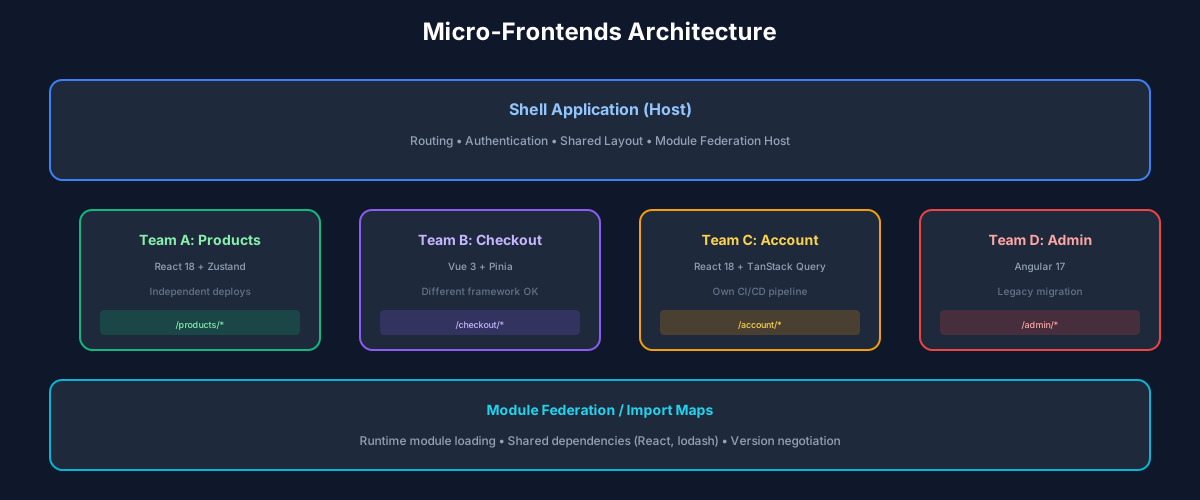
Micro-frontends apply microservices principles to frontend development. The goal: independent teams that can build, test, and deploy their features without coordinating with other teams.
This is not about technology - it is about organizational scaling. When you have multiple teams contributing to a single frontend, coordination costs grow exponentially. Micro-frontends create clear ownership boundaries that align with team structure.
The Right Conditions
Micro-frontends add complexity. They are worth it when:
They are overkill when you have a small team, a simple application, or when the coordination overhead is manageable.
Integration Approaches
Build-time integration: Package micro-frontends as npm packages, compose at build time. Simplest approach but requires coordinated releases.
Runtime integration via JavaScript: Load micro-frontends as JavaScript bundles at runtime. Module Federation is the modern standard here.
Server-side composition: Compose HTML fragments on the server. Good for SEO-critical pages and progressive enhancement.
Web Components: Encapsulate micro-frontends in custom elements. Framework-agnostic but with some limitations.
Module Federation Deep Dive
Webpack 5's Module Federation enables true runtime integration. Each micro-frontend exposes components, and hosts consume them dynamically. No build-time coordination required.
Key concepts:
Sharing React is critical - multiple React instances cause hooks to break. Mark React and React DOM as singletons with version requirements.
Cross-Cutting Concerns
Some things span micro-frontend boundaries:
These typically live in a "shell" application that orchestrates the micro-frontends.
Failure Handling
When a remote micro-frontend fails to load, the entire application should not crash. Implement graceful degradation:
Best Practices
Recommended Reading

💬Discussion
No comments yet
Be the first to share your thoughts!