Why Custom Workflows?
Off-the-shelf AI tools are general-purpose. Custom workflows:
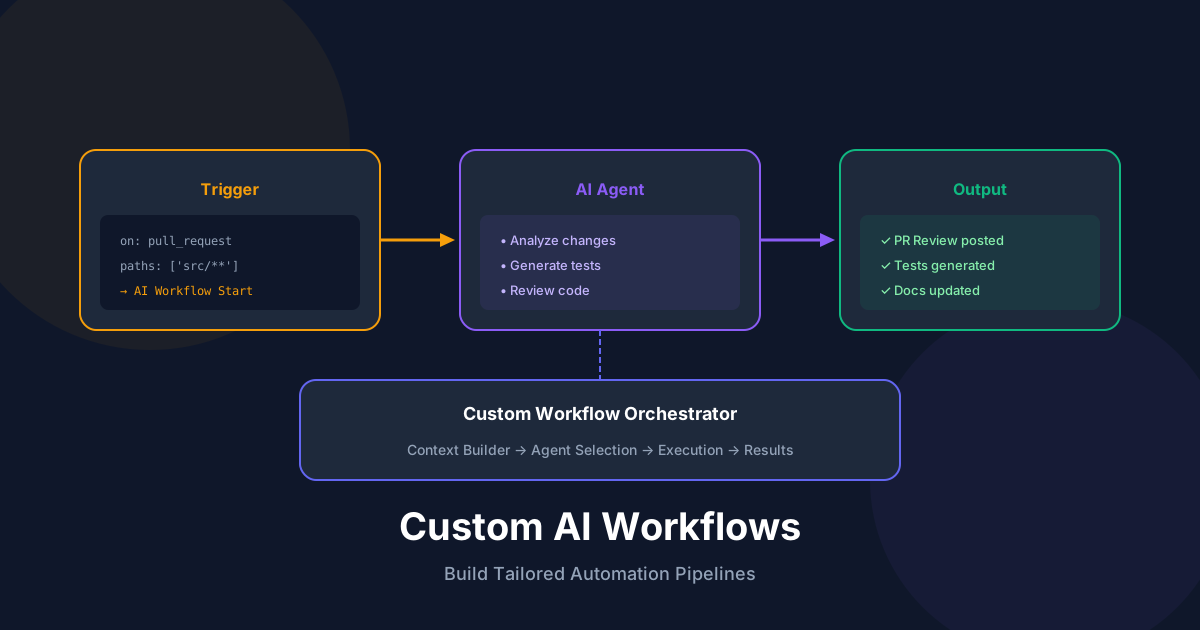
Workflow Architecture
Plain Text
┌─────────────────────────────────────────────────────┐
│                   Orchestrator                       │
│  ┌─────────┐  ┌──────────┐  ┌───────────────────┐  │
│  │ Trigger │──│ Context  │──│ Agent Selection   │  │
│  │ Manager │  │ Builder  │  │ & Execution       │  │
│  └─────────┘  └──────────┘  └───────────────────┘  │
└─────────────────────┬───────────────────────────────┘
                      │
    ┌─────────────────┼─────────────────┐
    │                 │                 │
┌───▼───┐        ┌────▼────┐       ┌────▼────┐
│ Code  │        │   PR    │       │  Docs   │
│ Agent │        │  Agent  │       │  Agent  │
└───────┘        └─────────┘       └─────────┘
Building a Code Generation Agent
Agent Definition
TypeScript
interface Agent {
  name: string;
  description: string;
  triggers: Trigger[];
  contextBuilder: ContextBuilder;
  execute: (context: Context) => Promise<Result>;
}

const codeGenerationAgent: Agent = {
  name: 'code-generator',
  description: 'Generates code following team patterns',

  triggers: [
    { type: 'command', pattern: '/generate' },
    { type: 'file-created', pattern: '*.spec.ts' },
  ],

  contextBuilder: async (trigger) => {
    const relevantFiles = await findRelatedFiles(trigger.file);
    const teamPatterns = await loadPatterns();
    const styleGuide = await loadStyleGuide();

    return {
      files: relevantFiles,
      patterns: teamPatterns,
      styleGuide,
      request: trigger.input,
    };
  },

  execute: async (context) => {
    const prompt = buildCodeGenPrompt(context);

    const response = await llm.complete({
      model: 'gpt-4-turbo',
      messages: [
        { role: 'system', content: context.styleGuide },
        { role: 'user', content: prompt }
      ],
    });

    return {
      code: response.content,
      explanation: response.reasoning,
    };
  },
};
Context Building
TypeScript
class ContextBuilder {
  async build(request: Request): Promise<Context> {
    // 1. Analyze the request
    const intent = await this.analyzeIntent(request);

    // 2. Find relevant code
    const relevantCode = await this.findRelevantCode(intent);

    // 3. Load team patterns
    const patterns = await this.loadPatterns(intent.domain);

    // 4. Get recent changes
    const recentChanges = await this.getRecentChanges();

    // 5. Build context window
    return {
      intent,
      code: this.prioritizeCode(relevantCode, intent),
      patterns,
      history: recentChanges,
      constraints: this.getConstraints(intent),
    };
  }

  private async findRelevantCode(intent: Intent): Promise<CodeFile[]> {
    // Semantic search over codebase
    const embeddings = await this.embedder.embed(intent.description);
    return await this.vectorStore.query(embeddings, { topK: 10 });
  }
}
PR Review Workflow
TypeScript
const prReviewWorkflow = {
  trigger: 'pull_request.opened',

  steps: [
    {
      name: 'analyze-changes',
      action: async (pr) => {
        const diff = await github.getPRDiff(pr.number);
        return analyzeCodeChanges(diff);
      },
    },
    {
      name: 'check-patterns',
      action: async (pr, analysis) => {
        return checkAgainstPatterns(analysis, teamPatterns);
      },
    },
    {
      name: 'security-scan',
      action: async (pr, analysis) => {
        return securityScan(analysis.changedFiles);
      },
    },
    {
      name: 'generate-review',
      action: async (pr, analysis, patterns, security) => {
        return generateReview({ analysis, patterns, security });
      },
    },
    {
      name: 'post-review',
      action: async (pr, review) => {
        await github.createReview(pr.number, review);
      },
    },
  ],
};
Documentation Generator
TypeScript
const docGeneratorWorkflow = {
  trigger: 'file.modified',
  filter: (file) => file.endsWith('.ts') && !file.includes('.test.'),

  execute: async (file) => {
    // Extract functions and types
    const ast = await parseTypeScript(file);
    const exports = extractExports(ast);

    // Generate documentation for each export
    const docs = await Promise.all(
      exports.map(async (exp) => {
        const existingDoc = extractJSDoc(exp);

        if (existingDoc && !isOutdated(existingDoc, exp)) {
          return existingDoc;
        }

        return generateDocumentation(exp, {
          style: 'jsdoc',
          includeExamples: true,
          includeParams: true,
        });
      })
    );

    // Update file with new documentation
    return updateFileWithDocs(file, docs);
  },
};
Workflow Orchestration
TypeScript
class WorkflowOrchestrator {
  private workflows: Map<string, Workflow> = new Map();
  private eventBus: EventEmitter;

  register(workflow: Workflow) {
    this.workflows.set(workflow.name, workflow);

    // Set up triggers
    workflow.triggers.forEach((trigger) => {
      this.eventBus.on(trigger.event, async (data) => {
        if (trigger.filter && !trigger.filter(data)) return;

        await this.execute(workflow, data);
      });
    });
  }

  private async execute(workflow: Workflow, data: unknown) {
    const context = await workflow.contextBuilder(data);

    // Execute with retry and error handling
    const result = await retry(
      () => workflow.execute(context),
      { maxAttempts: 3, backoff: 'exponential' }
    );

    // Log and notify
    await this.logExecution(workflow, context, result);

    return result;
  }
}
Metrics and Improvement
TypeScript
interface WorkflowMetrics {
  executionCount: number;
  successRate: number;
  averageLatency: number;
  userSatisfaction: number;
  codeAcceptanceRate: number;
}

async function trackAndImprove(workflow: Workflow) {
  const metrics = await getMetrics(workflow.name);

  // Low acceptance rate? Analyze rejected outputs
  if (metrics.codeAcceptanceRate < 0.7) {
    const rejections = await getRejectedOutputs(workflow.name);
    const analysis = await analyzeRejections(rejections);

    // Update prompts based on analysis
    await updateWorkflowPrompts(workflow, analysis.improvements);
  }
}
Best Practices
Recommended Reading
Recommended Read

Building LLM Apps
by Valentino Gagliardi
LLM application development
View on Amazon
As an Amazon Associate, we earn from qualifying purchases.
Recommended Read
The Pragmatic Programmer
by David Thomas
Developer practices
View on Amazon
As an Amazon Associate, we earn from qualifying purchases.
💬Discussion
🗨️
No comments yet
Be the first to share your thoughts!