Authentication is Just the Beginning
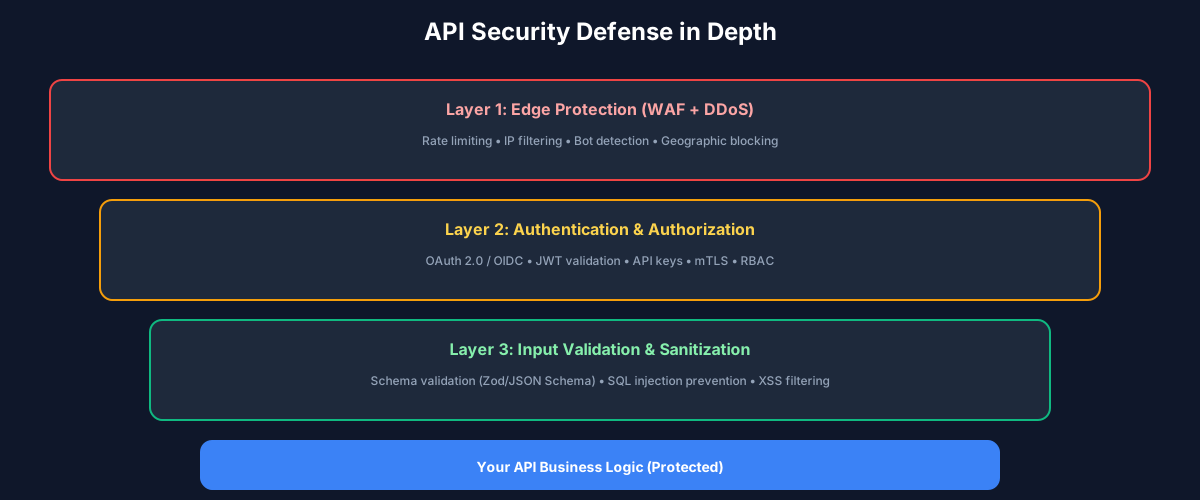
Most API security discussions focus on OAuth, JWT, and API keys. These are important, but they only answer one question: who is making this request? Real API security requires defense-in-depth across multiple layers.
The OWASP API Security Top 10 reveals common failures: broken object-level authorization, broken authentication, excessive data exposure, lack of resources and rate limiting, broken function-level authorization. Notice that most of these happen after authentication.
Layer 1: Rate Limiting and Throttling
Without rate limiting, attackers can brute force credentials, scrape your data, or simply overwhelm your infrastructure. Implement rate limits at multiple levels:
Use sliding window algorithms for smoother limiting. Consider implementing exponential backoff for repeated violations.
Layer 2: Input Validation
Every piece of input is potentially malicious. Validate rigorously:
Schema validation libraries like Zod or Joi provide type-safe validation with clear error messages. Validate at the API boundary, not deep in business logic.
Layer 3: Authorization
Authentication tells you who someone is. Authorization determines what they can do. Most breaches exploit authorization failures.
Implement checks at multiple levels:
Always check authorization server-side. Never trust client-provided user IDs or role claims without verification.
Layer 4: Request Integrity
For sensitive operations, verify request integrity with signatures. This prevents tampering and replay attacks.
Include a timestamp in signed requests and reject requests older than a few minutes. This prevents attackers from capturing and replaying legitimate requests later.
Layer 5: Response Security
What you return matters too:
Monitoring and Detection
Log every API request with context: who, what, when, from where, and the outcome. Use anomaly detection to identify:
Best Practices
Recommended Reading
💬Discussion
No comments yet
Be the first to share your thoughts!