"I Used to Love This Job"
Sarah was the developer everyone wanted on their project. Sharp, fast, helpful. The one who'd stay late to help a junior debug their code, who'd prototype solutions over the weekend because she was genuinely excited.
Six months later, she's staring at her laptop unable to type. The cursor blinks. A simple bug fix - something she'd have knocked out in twenty minutes before - feels insurmountable. She hasn't committed code in three days. Her Slack is full of unread messages she can't bring herself to open.
"I used to love this job," she tells her manager during a tearful 1:1. Two weeks later, she's on medical leave. Three months later, she quits tech entirely.
This isn't rare. Studies show 83% of developers experience burnout. Not occasional stress - burnout. The kind that makes you dread opening your laptop. The kind that makes you question whether you chose the right career. The kind that takes months or years to recover from.
The tech industry has a burnout problem, and it's getting worse. Always-on culture. Endless notifications. The pressure to keep up with rapidly changing technology. The expectation that passion means working nights and weekends. These forces compound until something breaks - usually the person.
But burnout isn't inevitable. It's the predictable result of unsustainable conditions, and those conditions can be changed.
Understanding Burnout
Burnout is not just being tired. It is a specific syndrome with three dimensions, first identified by psychologist Christina Maslach:
Exhaustion: Profound fatigue that rest does not fix. You wake up tired. Weekends do not restore you. Coffee stops helping. Everything feels like it requires more energy than you have.
Cynicism: Growing detachment and negativity. Work that once excited you now feels meaningless. Colleagues who once inspired you now irritate you. You catch yourself thinking "why bother?" more often than "how can we make this better?"
Reduced Efficacy: Declining productivity and quality despite effort. Tasks that used to be easy become difficult. Your confidence erodes. Imposter syndrome intensifies. You start to believe you are not good at your job - even though burnout, not ability, is the problem.
These three dimensions feed each other. Exhaustion leads to cynicism ("I'm too tired to care"). Cynicism leads to reduced efficacy ("I don't care, so I'll do the minimum"). Reduced efficacy leads to more exhaustion ("I'm working harder but accomplishing less"). The spiral accelerates until intervention or collapse.
Recognizing the Signs
Burnout develops gradually. Like the frog in slowly heating water, you may not notice until it's severe. Learning to recognize early signs - in yourself and others - enables intervention before crisis.
> If you only remember one thing: Burnout is easier to prevent than to recover from. Catch it early.
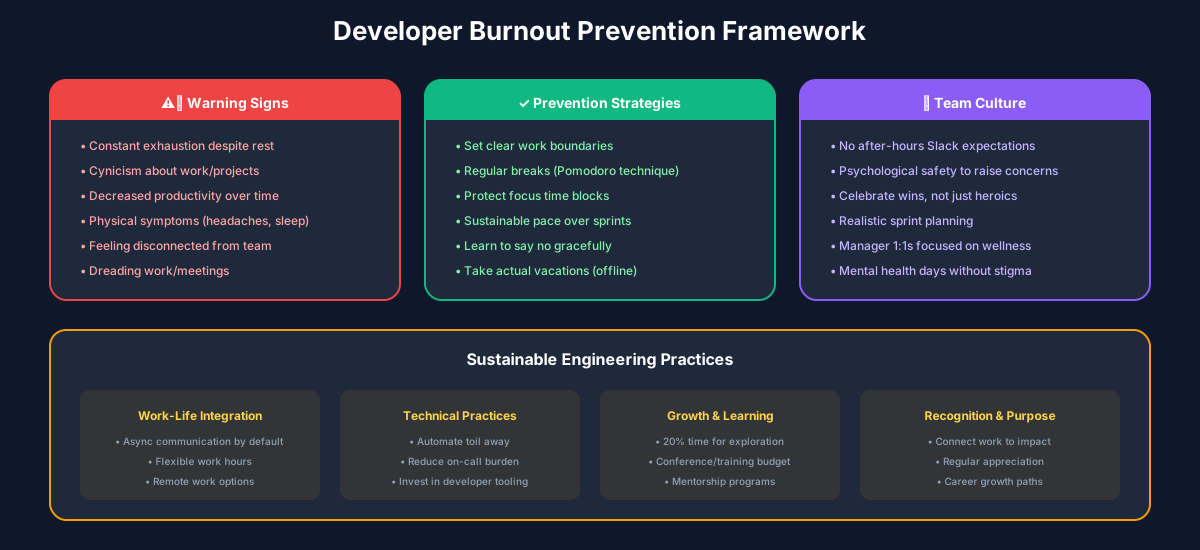
Physical Signs
Emotional Signs
Behavioral Signs
Cognitive Signs
If you recognize several of these in yourself, take it seriously. Burnout is easier to prevent than to recover from.
The Causes of Developer Burnout
Burnout is not a personal failure. It is the result of a mismatch between a person and their work environment. Understanding the causes helps address them.
Workload Mismatch
The most obvious cause: too much work, too little time. Unrealistic deadlines. Constant crunch. The expectation that "just this once" becomes "always." When there is always more work than capacity, burnout is inevitable.
Signs of workload mismatch:
- Consistent overtime (more than occasional spikes)
- Backlog that grows faster than capacity
- Pressure to cut corners to meet deadlines
- Guilt when taking breaks or vacation
- No time for learning, tech debt, or non-urgent work
Lack of Control
Humans need autonomy. When developers have no say in what they work on, how they work, or when they work, stress increases dramatically. Micromanagement, rigid processes, and top-down decisions without input all erode control.
Insufficient Reward
Reward is not just money (though underpaying contributes). It includes recognition, appreciation, and seeing the impact of your work. When effort goes unnoticed, when achievements are dismissed, when you never see your code actually help users - motivation erodes.
Breakdown of Community
Isolation kills. When team relationships are toxic, when there is no psychological safety, when competition replaces collaboration, work becomes a minefield. Remote work has amplified this for many - the organic social connections of an office do not happen automatically over Slack.
Absence of Fairness
When promotions seem arbitrary, when some people get away with things others cannot, when rules apply differently to different people - trust collapses. Perceived unfairness is corrosive even when you are not the direct victim.
Values Conflict
When your work conflicts with your values, burnout accelerates. Being asked to build features you find unethical. Working for a company whose mission you do not believe in. Cutting corners on security or quality when you take pride in craftsmanship.
Individual Strategies
While organizational change is essential, individuals can take meaningful steps to protect themselves.
Set and Enforce Boundaries
> Pro tip: Boundaries aren't selfish - they're necessary. The developers who last are the ones who protect their time.
Define when you work and when you don't. Turn off notifications after hours. Don't check email on vacation. Learn to say "I can do that, but not this week."
Boundary examples:
- "I don't check Slack after 6 PM"
- "I don't take meetings before 10 AM" (protect deep work time)
- "I'll need to push back on the deadline if scope increases"
- "I'm taking my full vacation, and I won't be reachable"
This feels uncomfortable at first. You fear being seen as uncommitted. But sustainable performers outlast heroic ones, and good organizations respect boundaries.
Manage Energy, Not Just Time
Different tasks require different types of energy. Complex coding requires deep focus. Meetings require social energy. Administrative tasks require patience. Schedule your day to match task energy requirements to your natural rhythms.
Energy management tactics:
- Do deep work when you're freshest (morning for most people)
- Batch meetings to preserve focus blocks
- Take real breaks (walk, not Twitter)
- Recognize when you're depleted and stop
- Protect weekends for genuine recovery
Invest in Recovery
Recovery is not optional - it is what makes sustained performance possible. Sleep matters more than heroic late nights. Exercise is not a luxury. Hobbies unrelated to technology give your brain different kinds of exercise.
Build a Support Network
Isolation amplifies burnout. Build relationships inside and outside work. Find people you can be honest with about struggles. Consider therapy or coaching - having a professional to talk to is not a sign of weakness.
Know Your Warning Signs
Burnout does not appear suddenly. Learn your personal early warning signs. For some, it is irritability. For others, it is procrastination or sleep problems. When you notice these signs, take action early.
Team and Organizational Strategies
Individual coping has limits. Sustainable teams require organizational commitment.
Realistic Planning
The most important organizational change is honest capacity planning. Account for maintenance, interrupts, learning, and the unexpected. Build slack into schedules. A team at 100% utilization has no capacity for anything unexpected - and unexpected things always happen.
Healthy planning practices:
- Plan for 70-80% capacity, not 100%
- Include tech debt and maintenance in roadmaps
- Account for context-switching costs
- Build buffer for unexpected issues
- Measure velocity, don't demand it
Sustainable On-Call
On-call is necessary for many systems, but poorly implemented on-call is a burnout factory. Rotate fairly. Provide real compensatory time off. Invest in reducing alerts through reliability engineering. Do not expect people to be both on-call and productive during their rotation.
Psychological Safety
People need to feel safe admitting they are struggling. Create environments where asking for help is normal, where admitting mistakes leads to learning rather than blame, where it is okay to say "I'm overwhelmed."
Recognition and Celebration
Notice and appreciate good work. Celebrate wins, not just ship dates. Recognize the person who mentored a teammate, who improved documentation, who advocated for quality - not just the person who shipped the most features.
Protect Focus Time
Meeting-heavy cultures are burnout cultures. Developers need uninterrupted time for deep work. Establish no-meeting days. Make it okay to decline meetings or say "this could be an email." Measure output, not presence in meetings.
When Burnout Hits
If you are already burned out, recovery takes time and intentionality.
Acknowledge the Reality
Stop minimizing. "I'm fine" when you are not fine delays recovery. Admit to yourself - and ideally to someone you trust - that you are burned out. This is not weakness; it is the first step to getting better.
Seek Professional Help
Burnout can co-occur with depression and anxiety. A therapist or counselor can help you process what you are experiencing and develop recovery strategies. Many companies offer Employee Assistance Programs with free counseling.
Take Real Time Off
If possible, take extended time away from work. A long weekend is not enough. Two weeks minimum, ideally more. During this time, actually disconnect - no checking email, no "just one quick thing."
Evaluate Your Situation
Sometimes recovery means changing how you work. Sometimes it means changing where you work. Burnout is a signal that something is unsustainable. Listen to that signal rather than returning to the same conditions that caused burnout.
Gradual Return
When you return, do so gradually. Do not immediately resume the pace that burned you out. Set stricter boundaries. Take on less. Build sustainable practices before ramping back up.
Building Burnout-Resistant Culture
For leaders, building a burnout-resistant culture is both an ethical imperative and a business necessity. Burned-out teams do not perform.
Model Sustainable Behavior
Leaders who send emails at midnight, who never take vacation, who brag about working weekends - they set expectations even when they say "don't feel pressured." Model the behavior you want to see. Take your vacation. Protect your boundaries. Talk about it.
Watch for Warning Signs
Pay attention to your team. Changes in behavior, quality, engagement - these are signals. Create regular check-ins where it is safe to discuss workload and well-being, not just status.
Address Root Causes
When someone burns out, do not just replace them. Understand what led to burnout and fix it. Otherwise, you will burn out the next person too.
Measure What Matters
If you only measure output, you incentivize unsustainable practices. Also measure team health, turnover, sick days, and well-being. Make these metrics visible and important.
The Long Game
Careers in software are long. The developers who thrive over decades aren't the ones who sprinted hardest in their twenties. They're the ones who built sustainable practices, protected their health, and stayed curious without being consumed.
> Watch out: Burnout isn't a badge of honor. It's damage - to individuals, to teams, to the software we build.
Prevention Checklist
FAQ
Q: How do I set boundaries without looking uncommitted?
Be explicit about what you WILL do, not just what you won't. "I'm most productive in morning focus blocks, so I schedule meetings after 2 PM" frames it as optimizing for output, not avoiding work.
Q: My company culture rewards overwork. What can I do?
Start by protecting yourself - you can't change culture if you're burned out. Then find allies. Document how sustainable practices improve outcomes. If the culture truly can't change, consider whether this is the right place for you.
Q: I think I'm already burned out. What's the first step?
Talk to someone - a therapist, trusted friend, or your doctor. Burnout often co-occurs with depression and anxiety. Professional help isn't weakness; it's the fastest path to recovery.
Q: How do I help a teammate who seems burned out?
Don't diagnose or prescribe. Instead: "Hey, I've noticed you seem stressed lately. I'm here if you want to talk, no pressure." Create safety for them to open up.
Q: Can I recover from burnout without leaving my job?
Sometimes, if the underlying conditions change. But if the same pressures exist, you'll likely burn out again. Recovery requires changing something - your role, your boundaries, or your environment.
---
Take care of yourself. Take care of your teammates. Build software and careers that are sustainable. The best code is written by people who are healthy, engaged, and present - not depleted, cynical, and counting the days until they can escape.
You deserve better than burnout. So does your team.
Recommended Reading

💬Discussion
No comments yet
Be the first to share your thoughts!