The Observability Challenge
Modern distributed systems are complex. A single user request might traverse dozens of services. When something goes wrong, finding the root cause requires visibility across the entire request path.
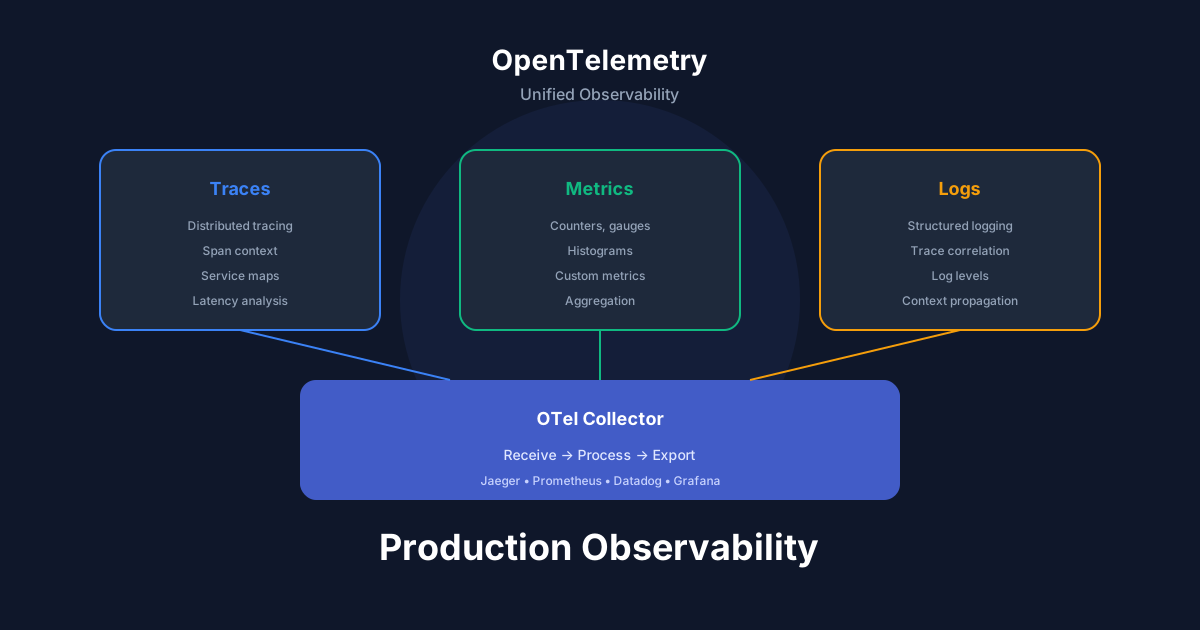
Traditional monitoring tools - separate solutions for metrics, logs, and traces - create data silos. Correlating information across tools is manual and slow. OpenTelemetry unifies observability under a single standard.
Why OpenTelemetry?
OpenTelemetry is a vendor-neutral standard for observability data. Benefits include:
Vendor independence: Instrument once, export to any backend. Switch from Datadog to Honeycomb without changing application code.
Unified signals: Traces, metrics, and logs share context. Correlate a spike in error rate with the exact traces that failed.
Automatic instrumentation: Libraries for common frameworks instrument HTTP, databases, and messaging with zero code changes.
Community momentum: CNCF project with broad industry support. The standard is here to stay.
The Three Pillars
Traces: Follow a request across services. Each span represents a unit of work. Parent-child relationships show the call graph. Find slow operations and error sources.
Metrics: Aggregate measurements over time. Request rates, error percentages, latency histograms. Alerting and dashboards.
Logs: Detailed event records. Structured logs with trace context enable correlation with traces.
The power is in correlation. Jump from a metric alert to relevant traces to detailed logs without context switching.
Instrumentation Strategy
Auto-instrumentation: Start here. SDK plugins automatically trace HTTP requests, database queries, and message queue operations. Get visibility with minimal code.
Manual instrumentation: Add custom spans for business operations. Wrap important functions to understand their performance and error rates.
Semantic conventions: Use standard attribute names. service.name, http.method, db.system - consistency enables cross-service analysis and vendor tooling.
Sampling: Managing Volume
High-traffic systems generate enormous trace volumes. Sending everything is expensive and often unnecessary.
Head-based sampling: Decide at trace start whether to sample. Simple but may miss interesting traces.
Tail-based sampling: Collect everything, decide what to keep after the trace completes. Keep all errors and slow traces. More complex but captures what matters.
Adaptive sampling: Adjust rates based on traffic. Sample more during low traffic, less during peaks.
A common strategy: 100% of errors, 100% of slow requests, 10% of everything else.
Cost Management
Observability costs can explode without controls:
Best Practices
Recommended Reading

💬Discussion
No comments yet
Be the first to share your thoughts!