The Protocol Decision
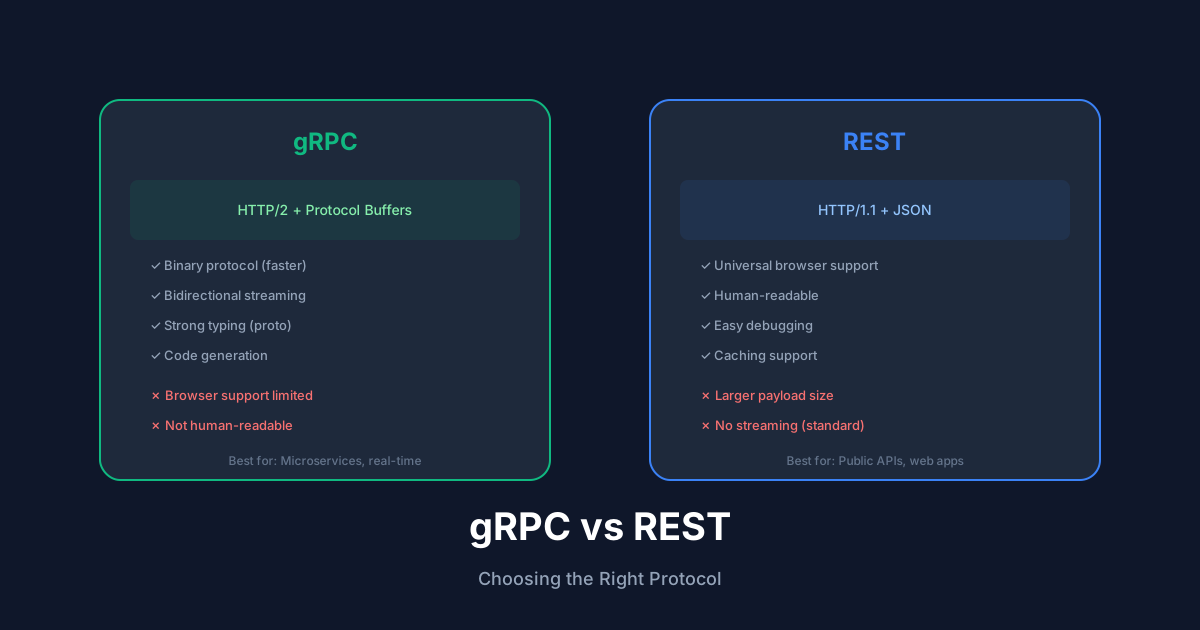
Choosing between gRPC and REST is not about which is "better" - it is about which fits your constraints. Both are mature, battle-tested, and widely supported. The right choice depends on your clients, performance requirements, team expertise, and ecosystem.
Understanding the tradeoffs helps you make an informed decision rather than following trends.
Protocol Fundamentals
REST over HTTP/JSON: Human-readable, universally supported, works everywhere. JSON parsing is slower than binary formats, but tooling is everywhere. Any HTTP client works. Browsers support it natively.
gRPC over HTTP/2 with Protocol Buffers: Binary protocol with strong typing. Smaller payloads, faster parsing, native streaming. Requires code generation. Limited browser support without proxies.
Performance Comparison
gRPC outperforms REST in raw throughput and latency:
However, REST is "fast enough" for most applications. Profile your actual use case before optimizing for performance you may not need.
Streaming Capabilities
gRPC's streaming support is a significant differentiator:
Server streaming: Server sends multiple responses to one request. Perfect for real-time updates, large result sets, or progress reporting.
Client streaming: Client sends multiple messages, server responds once. Useful for file uploads or batch operations.
Bidirectional streaming: Both sides send messages independently. Enables chat-like interactions, real-time collaboration, and complex protocols.
REST can approximate streaming with Server-Sent Events or WebSockets, but it is bolted on rather than native.
Developer Experience
REST's simplicity is an advantage. Curl a URL, read JSON, understand the response. No build step, no code generation, no proto files to manage.
gRPC requires more setup but provides stronger guarantees. Generated clients catch type errors at compile time. Schema evolution rules prevent breaking changes. Documentation is the proto file itself.
When to Choose REST
When to Choose gRPC
The Hybrid Approach
Many organizations use both: gRPC for internal service-to-service communication where performance matters, REST for external APIs where accessibility matters.
An API gateway can translate between them, exposing REST endpoints that call gRPC services internally.
Best Practices
Recommended Reading

💬Discussion
No comments yet
Be the first to share your thoughts!