GraphQL's Scaling Challenges
GraphQL's flexibility is both its strength and its challenge at scale. Clients can request exactly what they need, but they can also request too much. A single query can trigger hundreds of database calls, request deeply nested data, or overwhelm your servers.
Scaling GraphQL requires addressing these challenges systematically: solving N+1 queries, limiting query complexity, implementing effective caching, and potentially federating your schema across services.
The N+1 Problem and DataLoader
The N+1 problem is GraphQL's most common performance issue. Fetching a list of orders, then fetching the user for each order, results in 1 query for orders plus N queries for users.
DataLoader solves this by batching and caching. Within a single request, DataLoader collects all user IDs requested, makes one batched query, and returns results to each resolver. The pattern is essential for any GraphQL server at scale.
Create DataLoaders per request to avoid caching across requests. Use them for any field that resolves to related data.
Query Complexity Analysis
Not all queries are equal. A query for user name is cheap. A query for all users with all their posts with all their comments can be catastrophic.
Assign complexity scores to fields based on their cost. Multiply by arguments (first: 100 is more expensive than first: 10). Sum total complexity and reject queries exceeding your threshold.
Static analysis catches expensive queries before execution. This protects your servers from malicious or accidental query bombs.
Depth Limiting
Even with complexity limits, deeply nested queries can cause problems. Each level of nesting multiplies potential work.
Set a maximum query depth (typically 5-10 levels) and reject deeper queries. This prevents queries like user.posts.comments.author.posts.comments... that could run forever.
Caching Strategies
GraphQL caching is more complex than REST because queries are dynamic. Multiple strategies work together:
Response caching: Cache entire query responses by query hash. Works well for common, static queries. Apollo Server and similar tools support this natively.
Field-level caching: Cache individual field resolutions. The cacheControl directive specifies max age per field. Nested fields inherit parent cache settings unless overridden.
CDN caching: For public data, cache at the edge. Use persisted queries (query by ID rather than full query text) to make queries cacheable like REST endpoints.
Normalized caching: Apollo Client and similar tools cache entities by ID. Multiple queries referencing the same entity share cached data.
Federation for Microservices
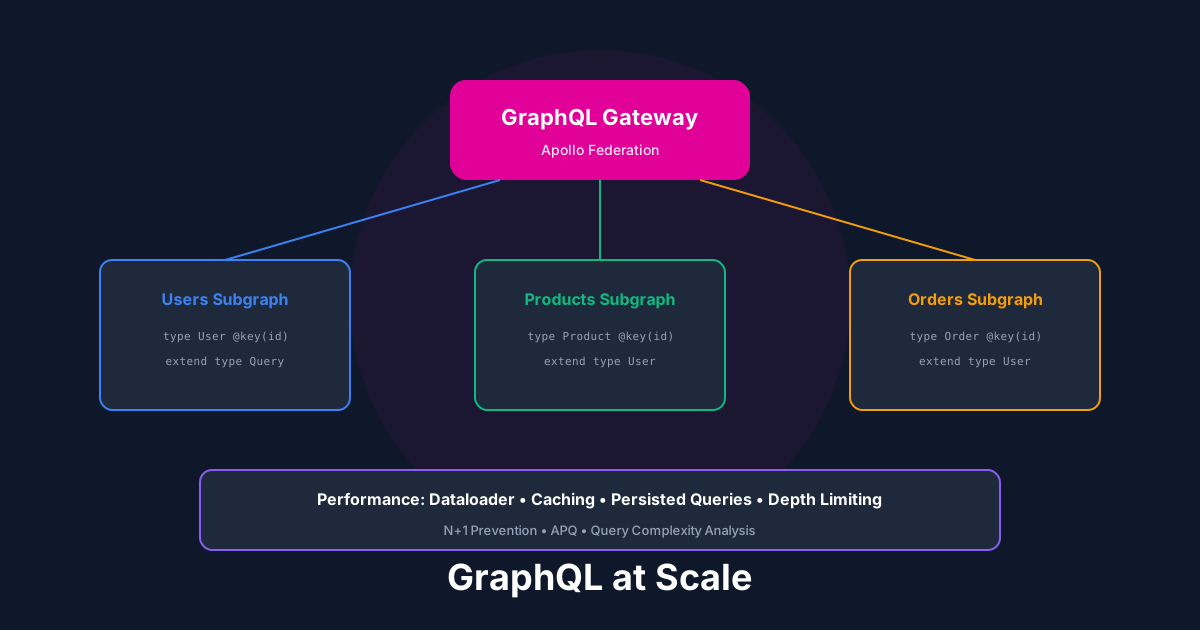
As teams grow, a monolithic GraphQL schema becomes a bottleneck. Federation allows multiple teams to own parts of the schema independently.
Each service defines its types and extends types from other services. A gateway composes these into a unified schema. Clients see one API while teams work independently.
Federation requires careful design of entity boundaries and reference resolvers. Plan your domain boundaries before implementing.
Best Practices
Recommended Reading
💬Discussion
No comments yet
Be the first to share your thoughts!