Introduction to Microservices Architecture
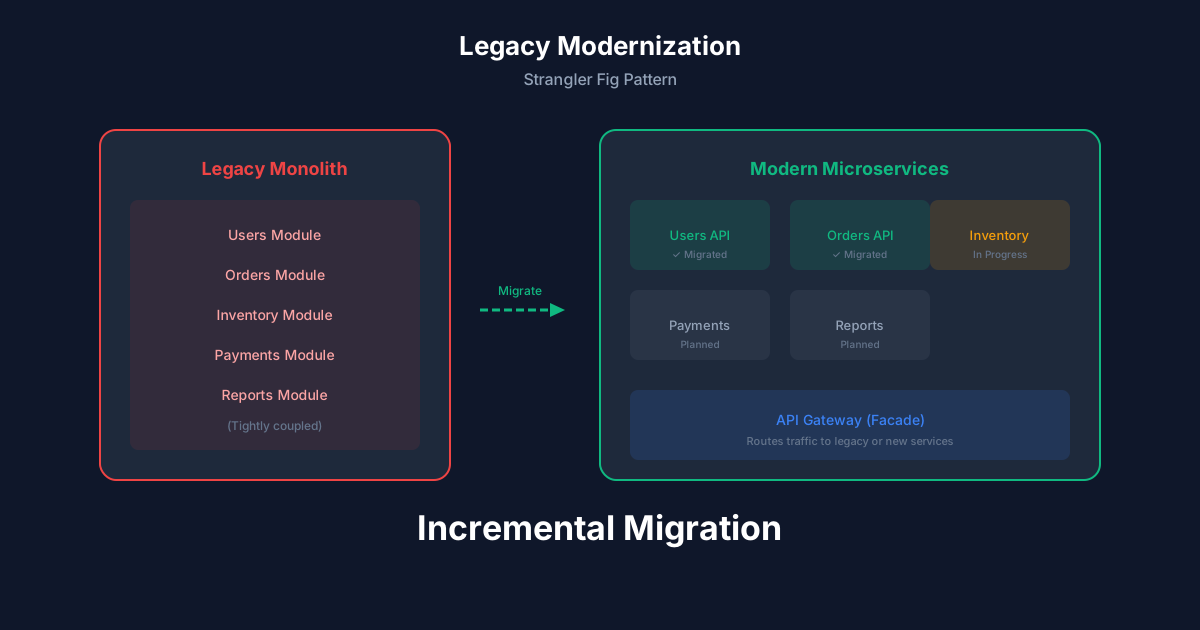
Microservices architecture has revolutionized how we build and scale modern applications. Unlike monolithic architectures, microservices break down applications into smaller, independently deployable services that communicate through well-defined APIs.
Why Microservices?
Essential Microservices Patterns
1. API Gateway Pattern
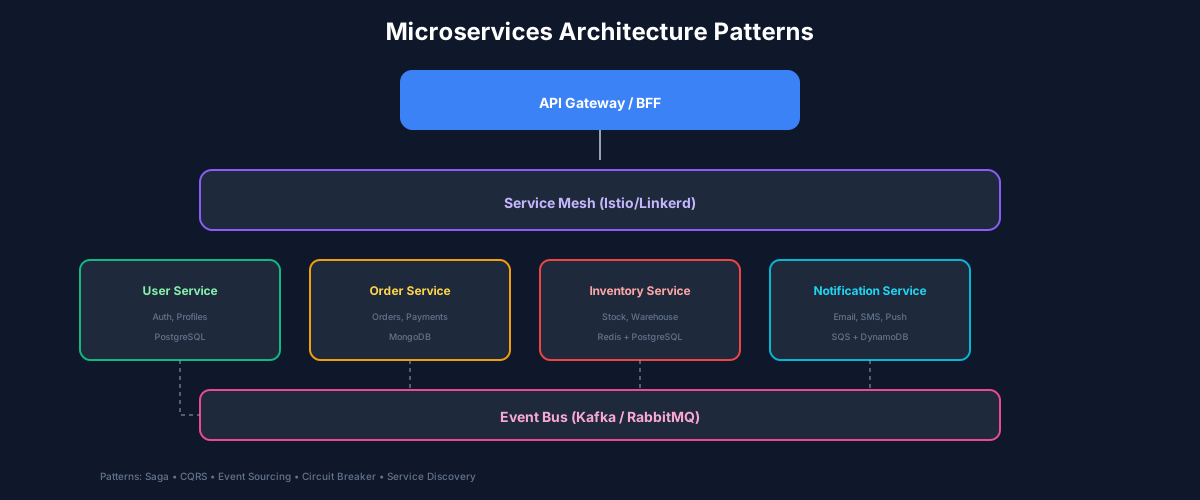
The API Gateway serves as a single entry point for all client requests. It handles:
// Example API Gateway Configuration
const gateway = {
  routes: [
    { path: '/api/users/*', service: 'user-service' },
    { path: '/api/orders/*', service: 'order-service' },
    { path: '/api/products/*', service: 'product-service' }
  ],
  middleware: ['auth', 'rateLimit', 'logging']
};
2. Service Mesh Pattern
A service mesh provides infrastructure-level features for service-to-service communication:
Popular implementations include Istio, Linkerd, and Consul Connect.
3. Saga Pattern for Distributed Transactions
When transactions span multiple services, use the Saga pattern:
Choreography: Services emit events that trigger actions in other services
Orchestration: A central coordinator manages the transaction steps
// Saga Orchestrator Example
async function createOrderSaga(orderData: Order) {
  try {
    await reserveInventory(orderData.items);
    await processPayment(orderData.payment);
    await createShipment(orderData.shipping);
    await confirmOrder(orderData.id);
  } catch (error) {
    await compensateTransaction(orderData.id);
  }
}
4. Event-Driven Architecture
Decouple services using asynchronous event communication:
5. Circuit Breaker Pattern
Prevent cascade failures with circuit breakers:
class CircuitBreaker {
  private failures = 0;
  private state: 'CLOSED' | 'OPEN' | 'HALF_OPEN' = 'CLOSED';

  async call<T>(fn: () => Promise<T>): Promise<T> {
    if (this.state === 'OPEN') {
      throw new Error('Circuit is OPEN');
    }

    try {
      const result = await fn();
      this.onSuccess();
      return result;
    } catch (error) {
      this.onFailure();
      throw error;
    }
  }
}
Best Practices
Conclusion
Microservices architecture offers powerful benefits but comes with complexity. Choose patterns based on your specific needs, team capabilities, and scale requirements.
Recommended Reading

Building Microservices
by Sam Newman
The definitive guide to designing fine-grained systems
As an Amazon Associate, we earn from qualifying purchases.

Microservices Patterns
by Chris Richardson
With examples in Java featuring enterprise patterns
As an Amazon Associate, we earn from qualifying purchases.
💬Discussion
No comments yet
Be the first to share your thoughts!