Failures Are Inevitable
In distributed systems, failures are not exceptional - they are normal. Networks partition. Services crash. Databases become unavailable. Hardware fails. The question is not whether failures will occur, but how your system responds when they do.
Resilient systems continue operating (perhaps degraded) during failures and recover quickly when failures resolve. Building resilience requires intentional design and continuous testing.
The Circuit Breaker Pattern
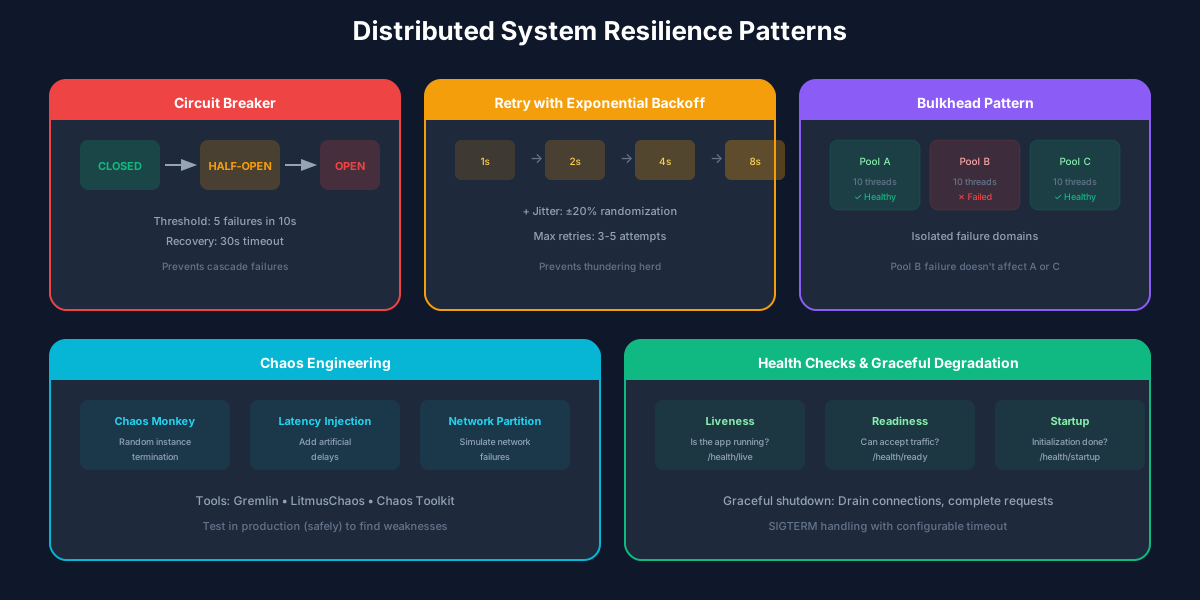
When a downstream service fails, continuing to call it wastes resources and can cascade failures. Circuit breakers prevent this by tracking failures and temporarily stopping calls to unhealthy services.
States:
Configure thresholds carefully: error percentage to trip, timeout duration, and recovery probe interval.
Retry Strategies
Transient failures resolve themselves - network blips, temporary overload, brief unavailability. Retries handle these automatically.
But naive retries can make things worse. If a service is overloaded, immediate retries add more load. Exponential backoff spaces retries out, giving the service time to recover.
Add jitter (randomness) to backoff intervals. Without jitter, all clients retry at the same time, creating thundering herd problems.
Timeouts: The Unsung Hero
Every external call needs a timeout. Without timeouts, a slow service ties up resources indefinitely, eventually exhausting connection pools and threads.
Set timeouts aggressively. If a call normally takes 100ms, a 10-second timeout is too long.
Bulkheads: Isolating Failures
Bulkheads isolate components so one failure does not sink everything. Separate thread pools for different services. Separate connection pools for different databases.
Chaos Engineering
Hope is not a strategy. Verify resilience by intentionally injecting failures in production.
Start small: kill a single pod, add latency to one service, fail a percentage of requests. Observe how the system responds. Fix weaknesses. Gradually increase scope.
Best Practices
Recommended Reading
💬Discussion
No comments yet
Be the first to share your thoughts!